
The first rule of strength training is that you have to get stronger. Most often we consider this lifting more weight. If a 135lb deadlift is good, a 225lb deadlift must be better. If 3 chin-ups are good, 30 must be better. Not always.
I’ll be the first person to argue against having perfect technique, provided that technique is pretty damn good in the first place. I’ve found that the idea of “perfect” exercises or repetitions ruins kinesthetic awareness & movement exploration. Don’t chase perfect, chase appropriate.
Throwing weight on the bar can be amazing, but if that’s our only understanding of progress we’re likely to rush things, and strain under loads that are manageable but not mastered. (<- Ooh, I like that one!) Rather than straining, let’s talk about the idea of tension.
Tension focuses on the idea of using muscles. Sounds simple, as that’s mostly the goal of training, but it’s not always the case. Muscles are active restraints, as they require energy to work, and then there are passive restraints, that mostly hang out and pick up the slack. This includes tendons, ligaments, bones. In reality, it’s really all the same, and that’s your musculoskeletal system.
An emphasis on creating tension can help you use more muscle, reinforce desirable movement, and find areas to improve in your training. This means leaner, stronger, and more body awareness. What’s the best way to do this? Probably the Double Kettlebell Bottoms Up Squat.
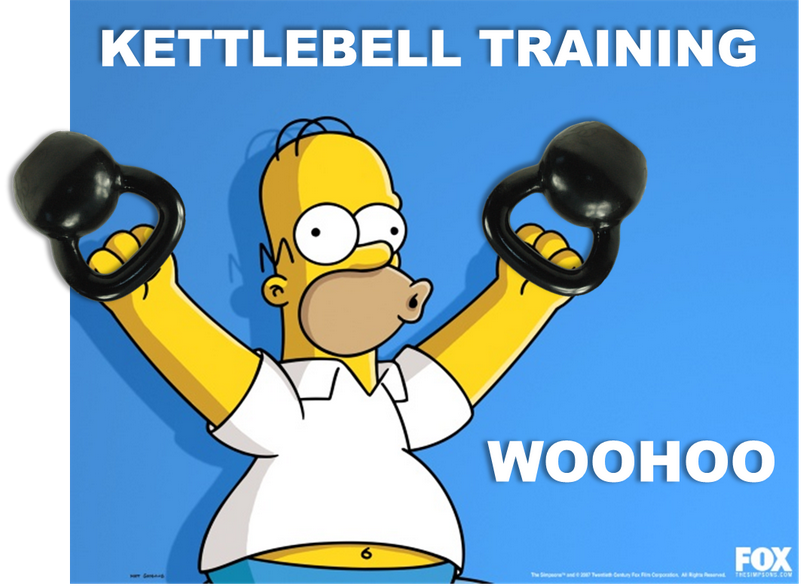
We’ve long known that squatting is basically a ticket to glory, and a double kettlebell bottoms up squat is extra awesome for helping you create tension. Holding two ‘bells in a bottoms up position forces you to squeeze the handle pretty damn hard, and leads to something called irridiation. This is like hitting an on-switch for muscles and they all jump on board the “Don’t drop these kettlebells party express”
The hands bones are connected to…everything.
These higher tension squats can help you get more from less weight, offer variety for days when you may be feeling a little bit beat up, and can be used on days in between doing heavier squats. It’s safe to say that you’re not going to be squatting all that heavy due to the kettlebells in the bottoms up position. Let’s check out an example:
It’s next to impossible to do these without creating substantial tension throughout your body, which is why the work so damn well at bringing your attention to tension. While your squat pattern is quite similar to your normal squat, you’ll find that the focus on squeezing the kettlebells lights up your arms, shoulders, and core far more than a traditional squat may.
If that’s the case we can use these to experience that tension, then apply it to our barbell squats. More tension and awareness allows you to move more weight for more reps with more awareness. The result? Improved everything and awesomeness.
This shit is hard. Do it.


 Harold Gibbons | MovementGPS
Leave a reply to click Cancel reply